


February 3, 2026
ICC Law Raises Questions Over Controversial Connolly Stumping
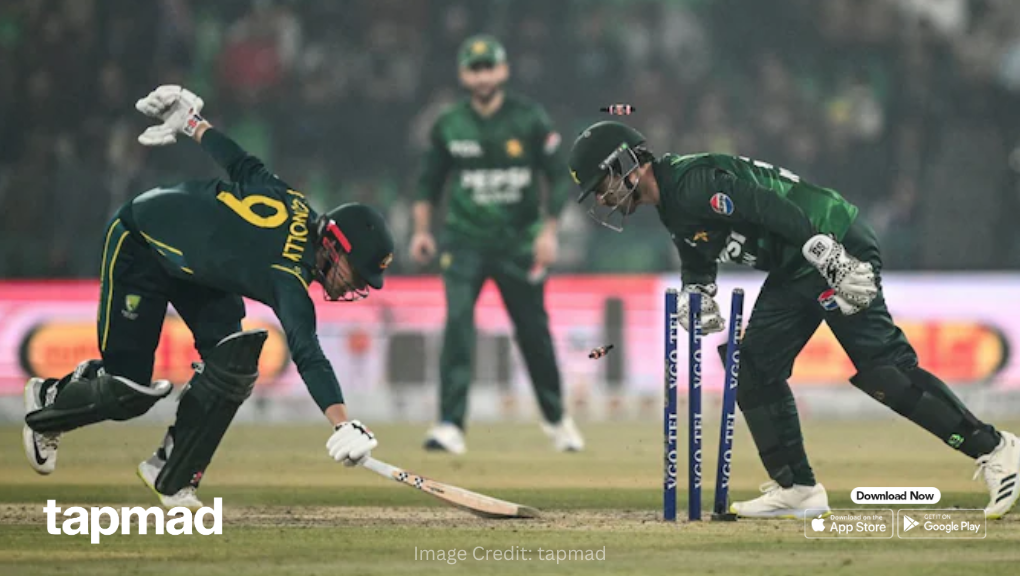

The game itself was already tilting Pakistan's way. Chasing 208, Australia had lost shape early. Cooper Connolly walked in at 82 for 6, the chase wobbling beyond repair.
Mohammad Nawaz dragged Connolly forward with a sharp turn down the leg side. Khawaja Nafay whipped off the bails. The umpire’s finger went up without hesitation.
Australia sank to 82 for 7, and the collapse gathered pace. Soon after, they were bundled out for 96, their heaviest T20I defeat on record in a Pakistan vs Australia T20I.
What the Replays Actually Showed
Slow-motion footage told a different story. Nafay broke the stumps using his left hand. The ball, however, sat firmly in his right. According to the ICC stumping law, a wicket is only broken fairly if the ball is held in the same hand that removes the bail or uproots the stump. It is a fine print clause, easy to overlook in real time, but decisive the moment it’s spotted.
In this case, the stumps were disturbed with the wrong hand. By law, the dismissal should not stand. Had the umpires caught it, Connolly would likely have survived.
Bigger Trouble for Australia Before World Cup
The decision summed up a rough tour. Australia struggled to read Pakistan’s spinners, lost the series 3–0, and absorbed two of their heaviest T20I defeats in the process.
With the T20 World Cup around the corner, the margin for error feels thinner than ever. Pakistan, meanwhile, moves on with momentum. The result has passed, but the debate does not.
As the ICC stumping law resurfaces in discussion rooms and broadcast panels, one thing is clear. Even at the highest level, small details can still decide big moments.
Read other trending news: ICC emergency meeting as Pakistan–India T20 World Cup row deepens