


December 9, 2025
Top 10 Players with the Most Test Matches, All-Time Cricket Legends
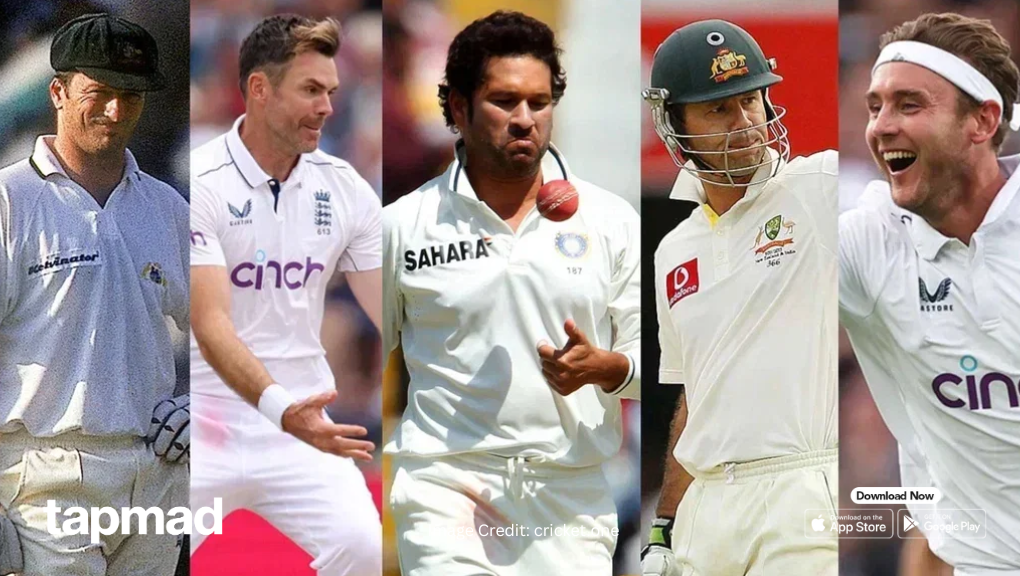

Fans often look at runs and wickets, but the real sign of greatness comes from time spent at the top. Test cricket demands control, focus, and consistency. Only a few players stay long enough to be called the most experienced Test cricketers. These names carry history because they shaped how the sport grew.
The list includes batters who stayed calm under pressure and bowlers who kept their form for years. These legends reflect commitment and skill. This article gives a full look at the players with the most Test matches, and it highlights why they still stand as all-time Test cricket legends.
Every name shows how much the format rewards discipline and patience for success.
Players with the Most Test Matches
|
Player |
Span |
Mat |
Runs |
HS |
Ave |
100 |
Wkts |
|
SR Tendulkar (IND) |
1989-2013 |
200 |
15921 |
248* |
53.78 |
51 |
46 |
|
JM Anderson (ENG) |
2003-2024 |
188 |
1353 |
81 |
8.96 |
- |
704 |
|
RT Ponting (AUS) |
1995-2012 |
168 |
13378 |
257 |
51.85 |
41 |
5 |
|
SR Waugh (AUS) |
1985-2004 |
168 |
10927 |
200 |
51.06 |
32 |
92 |
|
SCJ Broad (ENG) |
2007-2023 |
167 |
3662 |
169 |
18.03 |
1 |
604 |
|
JH Kallis (ICC/SA) |
1995-2013 |
166 |
13289 |
224 |
55.37 |
45 |
292 |
|
S Chanderpaul (WI) |
1994-2015 |
164 |
11867 |
203* |
51.37 |
30 |
9 |
|
R Dravid (ICC/IND) |
1996-2012 |
164 |
13288 |
270 |
52.31 |
36 |
1 |
|
AN Cook (ENG) |
2006-2018 |
161 |
12472 |
294 |
45.35 |
33 |
1 |
|
JE Root (ENG) |
2012-2025 |
160 |
13704 |
262 |
51.32 |
40 |
73 |
Let’s have a deeper look at each legend and what made their Test career last so long.
Sachin Tendulkar
Sachin Tendulkar holds the top spot in the list of most Test matches played. His record of 200 matches remains one of the strongest marks in cricket. Fans still follow his numbers because they show control and consistent form across decades.
His ability to read bowlers early helped him stay effective for a long time. He scored 15921 runs and set a high standard for all batters. His calm style worked in all conditions, and he never slowed down when pressure increased.
His run tally shows how much he valued long innings. The 51 centuries reflect a balance of stability and match awareness. His top score of 248* still stands out because it came from patience and strong timing.
Sachin also took wickets when the team needed variety, and his fielding added more value to his long career. Fans still call him the face of Test cricket because his numbers shaped the entire format. His presence in the list of all-time Test cricket legends remains secure.
James Anderson
James Anderson ranks second among the most capped Test players, and his career lasted due to sharp swing control. He reached 188 matches by keeping his rhythm steady, even when conditions changed.
His skill in moving the ball both ways made him a constant threat. Anderson took 704 wickets with a strong average, and he stayed active by adjusting his pace and angles.
His best spell of 7/42 showed his control over line and late swing. He kept his fitness in check and relied on clean seam movement. His long partnership with Stuart Broad shaped England’s Test plans for many years.
Anderson also handled long spells with discipline, and his work rate stayed strong. His small batting record never took away his value because his wicket numbers placed him among the most experienced Test cricketers. Fans still look at his career as a model for long-term fast bowling.
Ricky Ponting
Ricky Ponting played 168 matches and built his position with consistency in batting. His strong front-foot play helped him control fast bowlers in all conditions.
Ponting scored 13378 runs and made 41 centuries. His top score of 257 came from pure timing and clean stroke selection. He built long partnerships and used his steady technique to put pressure back on bowlers.
Ponting’s record reflects mental strength because he stayed active for many years at the highest level. He played quick bowlers with calm footwork, and his pull shot stayed one of the best.
His fielding was sharp, and his presence lifted team confidence. This made him one of the strongest names in the category of players with the most Test matches.
Steve Waugh
Steve Waugh stands beside Ponting with 168 Tests. His batting style focused on staying at the crease for long periods. He scored 10927 runs and built a strong record with 32 centuries. His top score of 200 showed his control in long sessions.
Waugh also offered medium pace and took 92 wickets with good accuracy. His best bowling figure of 5/28 showed his ability to break partnerships.
Waugh played with a calm approach and used a simple technique to handle pressure. He understood match situations well and kept his scoring steady. His long run in Test cricket came from strong discipline.
He stayed fit and consistent, which helped him build a position in the list of all-time Test cricket legends. His fielding also brought value because he stayed active inside the ring.
Stuart Broad
Stuart Broad played 167 Tests and made his name through pace, bounce, and accuracy. His long spells and sharp lengths helped him reach 604 wickets. His best figure of 8/15 showed his power when conditions suited him.
Broad stayed focused for many years due to his simple and repeatable bowling action. He kept his form consistent and used slight seam changes to surprise batters.
His batting also helped in key moments, and he scored a century along the way. Broad stayed calm when pressure increased, and he always aimed for the right line. His partnership with Anderson shaped England’s bowling plans.
This long run placed him among the most experienced Test cricketers. Fans still remember his spells that turned matches in minutes. His fielding added more balance to his complete profile.
Jacques Henry Kallis
Jacques Kallis ranks among the strongest names in the list of most capped Test players. His 166 matches reflect long-term stability and complete skill. Kallis balanced batting and bowling with full control. His run tally of 13289 came from clean footwork and smart placement.
His average of 55.37 shows how steady he stayed across long spells of play. He played late and used simple timing to guide the ball. His 45 centuries place him among the most consistent batters in Test history. His top score of 224 proved that he had the patience and control needed for long innings.
Kallis also offered a strong bowling option. His 292 wickets came from control in line and a simple action. He kept his pace steady and used slight movement to find edges. His best spell of 6/54 highlighted his impact in tight sessions.
His ability to deliver on both sides made him one of the top all-rounders in the list of players with most Test matches. His fielding added more value since he was quick in the slips and stayed focused throughout long sessions.
His full skill set shaped many matches, and his career remains a clear example of long-term consistency.
Shivnarine Chanderpaul
Shivnarine Chanderpaul played 164 Test matches and built a career with patience and clean stroke placement. His unusual stance helped him judge the line early. Chanderpaul scored 11867 runs by staying calm and avoiding risky shots.
His average of 51.37 reflects his ability to control pressure. He focused on simple timing and strong defense. His unbeaten top score of 203* came from long hours of focus and smooth shot selection. His 30 centuries show how steady his form remained across different phases of West Indies cricket.
Chanderpaul also took wickets when he bowled his soft spin. He ended with 9 wickets, and although bowling was not his main role, he provided variety in short spells. His best figure of 1/2 came from tight control in line.
He fielded well in the ring and stayed alert for quick chances. Chanderpaul’s long run in Test cricket came from discipline and quiet strength. Fans still see him as one of the most experienced Test cricketers because he never lost focus in long innings.
His calm presence shaped many West Indies chases, and he set a strong example for young players.
Rahul Dravid
Rahul Dravid played 164 Test matches and stayed steady through all conditions. His calm style earned him a reputation for long sessions. Dravid scored 13288 runs with an average of 52.31, and his top score of 270 still stands as one of the cleanest displays of control.
His 36 centuries came from patient shot selection. He judged movement early and used a straight bat in every situation. Dravid handled fast bowling with simple footwork, and he defended with strong technique.
His single Test wicket added variety, but his main role came with the bat. Dravid stood in the slips for many years and took 210 catches. This large number shows his clean reflexes and steady hands.
His long run in Test cricket came from control and discipline. He valued each session and stayed focused even when the ball moved sharply. Fans refer to him as one of the strongest names in the list of most Test matches played because his consistency shaped many Indian wins.
His calm presence helped build partnerships and brought stability in tough conditions.
Alastair Nathan Cook
Alastair Cook played 161 Test matches and became England’s most successful opener. His simple technique helped him handle swing and spin. Cook scored 12472 runs with an average of 45.35. His top score of 294 came from long hours of steady footwork.
He played straight and judged length early, which helped him stay at the crease. His 33 centuries reflect his focus on tough conditions, where he played smart cuts and pulls with clean timing.
His single wicket added a rare moment to his career. His fielding remained sharp, and he took 175 catches. Cook stayed focused and followed a simple approach. His long run came from fitness and calm decision-making.
He handled new ball spells from world-class bowlers. Fans still see him as a top name in the list of all-time Test cricket legends because he stayed consistent. His steady style shaped many England innings, and his approach became a model for young openers.
Joe Root
Joe Root played 160 Test matches and built a record filled with clean stroke play. His run tally of 13704 highlights his value at number four. Root stayed busy at the crease and used quick footwork to find gaps.
His top score of 262 showed his control during long innings. His average of 51.32 reflects consistency. Root made 40 centuries and used strong timing to guide the ball. He stayed calm under pressure and adjusted to conditions quickly.
Root also delivered with the ball at important stages. His 73 wickets came from smart off-spin. His best figure of 5/8 marked one of his finest spells. He fielded well and took 213 catches. His long experience comes from early control and fitness.
Root remains one of the strongest names in most capped Test players for modern cricket. His smooth technique keeps him active, and fans now see him as a major part of England’s Test plans.
His ability to score in all conditions strengthens his position among the most experienced Test cricketers.
Conclusion
The list of most Test matches played reflects time, discipline, and full dedication. Every player mentioned stayed active at the top level for many years. Their numbers reflect strong technique and clear focus.
Test cricket rewards consistency, and these names proved their value across long careers. They shaped moments that fans still follow. Their records highlight strong character and pure skill. Each legend built a unique style and used it well.
The sport grew because of such committed names. Future players look at them for guidance because these records came from control and patience. This list remains a strong reminder that Test cricket rewards long-term focus more than anything else.
FAQs
Who holds the record for the most Test matches played?
Sachin Tendulkar holds the top spot with 200 Test matches. His full control and long-term form placed him above every other player in this list.
Which bowler has the most Test matches?
James Anderson holds the highest number among bowlers with 188 matches. His long career came from fitness and clean swing control.
Which all-rounder appears in the top 10 list?
Jacques Kallis stands out as the all-rounder with 166 matches. He added value with both runs and wickets.
Who is the most successful Test opener in this list?
Alastair Cook is the leading opener with 161 matches and a strong record built on steady technique.
Is Joe Root still active in Test cricket?
Yes, Joe Root continues to play, and his long run strengthens his position among the players with the most Test matches.