


December 4, 2025
Glenn McGrath vs James Anderson - Masters of Consistency
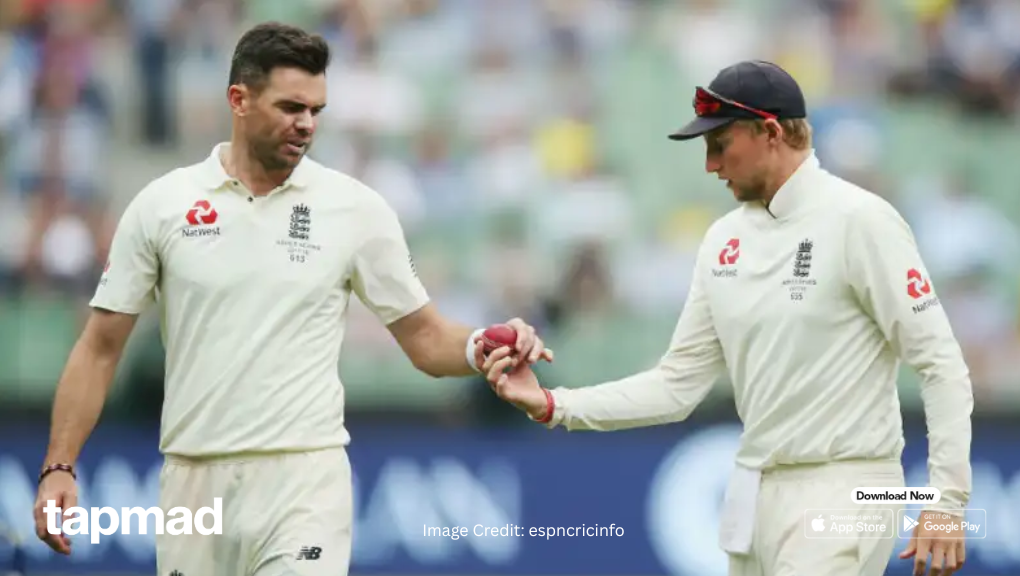

When James Anderson went past Glenn McGrath’s tally of 563 Test wickets, it was more than just a number. It was a landmark moment for fast bowling.
Out of nearly 3000 cricketers who have played Test cricket, only a very small group have even crossed 500 wickets. And among them, Anderson and McGrath stand out as the two great pace metronomes of modern cricket, built not just on talent, but on relentless consistency.
Anderson’s 564th wicket, when he bowled Mohammed Shami, pushed him past McGrath to become the most successful fast bowler in Test history at that point. That moment sparked endless discussions, debates, and deep McGrath vs Anderson wickets analysis. Who was better? Who was more dangerous? Who was more consistent across conditions?
The honest answer: they were very different - and both brilliant.
Different methods, same result
In pure visual terms, you could not ask for two more different fast bowlers.
Glenn McGrath was tall, lean, almost mechanical in rhythm. He rarely bowled at express pace. Instead, he lived on a nagging good length, just outside the off stump, over and over again. At 6'5", he used his height to extract steep bounce from a length, while the seam kissed the pitch and did just enough. Batters knew what was coming and still couldn’t handle it.
James Anderson started very differently. Early in his career, he was a swing bowler first, a complete bowler later. He was known for the prodigious curve of the ball in the air, especially in English conditions. Over time, he added more control, more patience, and more skills with the old ball. By the latter stages of his career, he was widely seen as one of the most complete seam bowlers ever.
So when people talk about McGrath vs Anderson bowling comparison, they are really comparing two different toolkits aimed at the same target: accuracy, repeatability, and mental discipline.
Test Sareer Snapshot - McGrath vs Anderson Bowling Comparison
If we look at a basic McGrath Anderson head-to-head in Test cricket (based on the data you’ve provided):
- James Anderson
- Tests: 188
- Wickets: 704
- Average: 26.45
- Strike rate: 56.8
- 5-wicket hauls: 32
- Best innings: 7/42
- Best stats per match: 11/71
- Tests: 188
- Glenn McGrath
- Tests: 124
- Wickets: 563
- Average: 21.64
- Strike rate: 51.9
- 5-wicket hauls: 29
- Best innings: 8/24
- Best stats per match: 10/27
- Tests: 124
While McGrath’s average of 21.64 is exceptional, Anderson's average of 26.45 is remarkable in its own right, especially considering the different eras, workloads, and roles each player had. That is why any McGrath vs Anderson bowling comparison must be read in context, like different conditions, styles, and cricketing timelines.
How McGrath announced himself
McGrath didn’t explode into Test cricket straight away. He debuted in the 1993/94 Australian summer and started fairly quietly. His career truly shifted in 1995, during Australia’s tour of the West Indies. With Craig McDermott injured, McGrath suddenly had to lead the pace attack.
He delivered.
Across that tour, he took 24 first-class wickets, including 17 wickets in four Tests. From that point, he wasn’t just “one of the bowlers”, he was the spearhead. The long tradition of Australian pace - Lindwall, McKenzie, Lillee, McDermott now rested on McGrath’s shoulders, and he carried it for the next decade with ruthless consistency.
His milestones came quickly:
- 50 wickets by his 15th Test
- 100 by his 23rd
- 200 by his 45th
- 300 by his 64th
- 400 by his 87th
- 500 by his 110th
Through the late 1990s and early 2000s, McGrath had a long peak: from that West Indies tour in 1995 to around 2002, he took 397 Test wickets at about 20.40. Nobody in the world, spin or pace, took more wickets in that period. Among fast bowlers, only Shaun Pollock came close, and even he was some way behind in total wickets.
How Anderson grew into greatness
James Anderson’s story is very different. He burst into attention with a dream debut, a five-wicket haul at Lord’s, but faded in and out of the England side for several years. In the early 2000s, England often preferred Steve Harmison, Matthew Hoggard, and Simon Jones. Anderson looked like he might become a “what if” bowler.
His real turning point came in 2008. At Trent Bridge, in a series decider against New Zealand, he took a stunning 7 for 43. That spell was a reminder of his natural talent, but this time, he held on to his place. In the same summer, he was excellent again against South Africa. From there, he became England’s senior seamer.
There are very few fast bowlers who improve in their thirties; most fade. Anderson honed his trade, sacrificed white-ball cricket following the 2015 World Cup to specialise in Tests, and used that additional energy in extending his peak. He had almost 200 Test wickets in the 40+ Tests that followed, giving him an average of less than 21, and bringing his career average below 27.
In a long-term McGrath vs Anderson wickets analysis, that late-career surge is what allowed Anderson to go from a good bowler to a great one.
Home and Away – Who Ruled Where? McGrath Anderson Head-to-Head Analysis
One of the most interesting questions in any McGrath vs Anderson comparison is: who did better outside their comfort zone?
From the numbers you’ve given:
Anderson at home vs away
- At home (England):
- 438 wickets
- Average: 24.41
- Strike rate: 52.3
- 24 five-wicket hauls
- 438 wickets
This is where Anderson built his reputation: Duke's ball, cloudy skies, helpful pitches.
- Away from home:
- 266 wickets
- Average: 30.66
- Strike rate: 64.8
- 266 wickets
He still has very good spells abroad, but the numbers are clearly weaker.
McGrath at home vs away
- At home (Australia):
- 289 wickets
- Average: 22.43
- Strike rate: 54.7
- 289 wickets
- Away from home:
- 274 wickets
- Average: 20.81
- Strike rate: 48.9
- 274 wickets
McGrath was almost as good, or sometimes even better, away from home. That is rare for a fast bowler.
So, in a pure McGrath vs Anderson bowling comparison, especially outside home conditions, McGrath is comfortably ahead. His away average is not just better than Anderson’s; it is one of the best away records ever for a fast bowler.
Ashes - the ultimate test
For an Australian or English bowler, the real measuring stick is the Ashes.
In Ashes Tests:
- Glenn McGrath
- 157 wickets in 30 Tests
- Average: ~20.9
- At least 19 wickets in almost every series after his debut
- Several series which he dominated the headlines
- 157 wickets in 30 Tests
- James Anderson
- 117 wickets in 39 Ashes Tests
- Average: 35.97
- 117 wickets in 39 Ashes Tests
Anderson is one of England’s leading wicket-takers in Ashes history, but compared to McGrath’s Ashes record, his numbers look modest. McGrath also won more Player of the Match awards in Ashes Tests.
If we frame this as a focused McGrath Anderson head-to-head in Ashes cricket, McGrath is the clear winner.
Subcontinent and Asian Conditions: McGrath vs Anderson Wickets Analysis
Fast bowlers are often judged by how they adapt to the subcontinent, like slow pitches, hot weather, low bounce, and conditions more suited to spin.
From the numbers in your data:
- McGrath in Asia:
- 19 Tests, 72 wickets
- Average: 23.02
- Wickets per Test: 3.79
- 19 Tests, 72 wickets
- Anderson in Asia:
- 32 Tests, 92 wickets
- Average: 27.51
- Wickets per Test: 2.88
- 32 Tests, 92 wickets
Again, McGrath’s numbers are stronger. However, Anderson did improve over time. In 32 Tests in Asia, he took 92 wickets at 27.51, averaging about 2.88 wickets per Test, reflecting his clear adjustment and growth in sub‑continental conditions.
Still, in this part of the McGrath vs Anderson wickets analysis, the Australian edges ahead once more.
Legacy and the final verdict
Even McGrath himself has spoken highly of Anderson. He has said that Anderson’s record will stand the test of time and questioned whether any fast bowler, in this era of heavy schedules and T20 leagues, will be able to go past him.
So, who wins McGrath Anderson head-to-head?
- In longevity, late-career improvement, and total wickets, Anderson takes the lead.
- In terms of style, McGrath is the relentless machine; Anderson is the artist who kept sharpening his tools even in his thirties.
If this were a simple “who is better” debate, it might look like a win for McGrath on pure numbers. But cricket is bigger than a single metric. A fair conclusion is this:
McGrath set the gold standard for consistent seam bowling across all conditions.
Anderson proved that with patience, adaptation, and commitment, you can chase that standard and even go past the number.
In any honest McGrath vs Anderson wickets analysis, one thing is clear: these two are not just great fast bowlers of their eras, they are true masters of consistency in the history of Test cricket.