


January 21, 2026
India vs New Zealand 2nd T20I 2026 Match Preview & Analysis
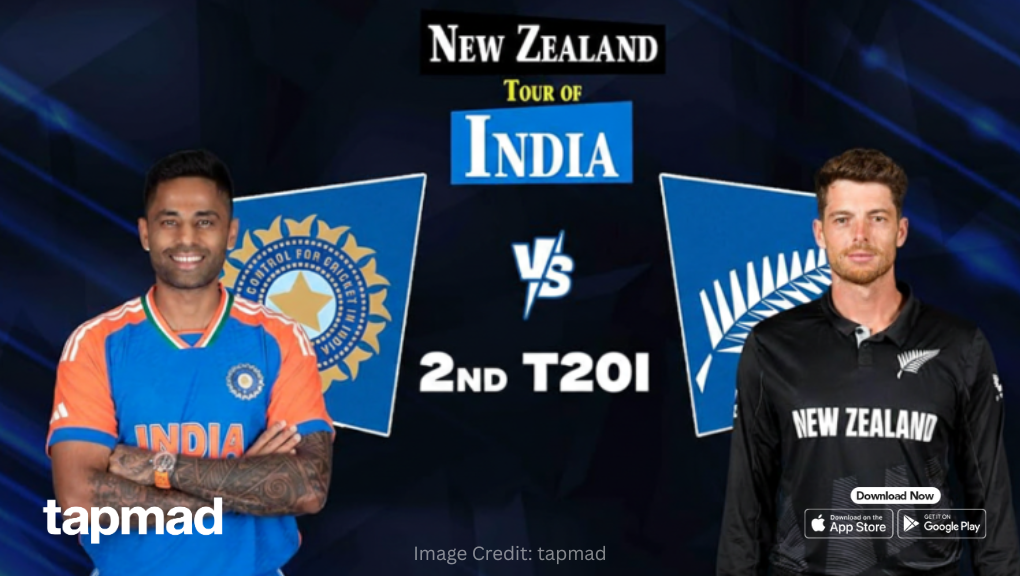

The India vs New Zealand 2nd T20I comes with a lot of momentum already shaping the series. Having lost the an opening match of the series, the pressure now rests firmly on New Zealand as both nations head to the important match at Raipur. The second match is more significant than a regular bilateral affair, as it is going to challenge depth, flexibility, and mental stamina at the beginning of the tour.
Having both teams with explosive talent and versatile bowling attacks, one can look forward to an exciting contest. The weather conditions in Raipur are likely to be favorable to stroke-play, providing further complexity. The Ind vs NZ rivalry has resulted in close matches in previous years and this match promises to deliver the same intensity.
Series Context and Match Importance
The tour of India by New Zealand is always a difficult one, and this series is no exception. T20 cricket in India is a strong point, and they have the privilege of being competitive, whereas New Zealand has to depend on their skill in executing plays. The visitors must respond quickly to keep the series alive, as they have lost it.
To India, the second T20I is an opportunity to gain an early lead.
India's Recent Performance
India has opened the series with a resounding 48-run win in the first T20I, and that was how the series began.
Prior to this series, India had had two consecutive victories over South Africa, including a comfortable seven-wicket win and a 30-run win against the latter in the last T20I. Even one of those matches was cancelled because of the weather, although overall, the acts of India demonstrated richness and flexibility. Their only setback came earlier, which was the significant loss previously in a series in South Africa, which they rectified within a short time.
New Zealand Recent Performance
New Zealand’s recent form has been mixed. They went into the India series with confidence following good performances against the West Indies, where they had won on several occasions by close margins. Those victories demonstrated that they could cope with the pressure situations successfully.
The initial T20I with India, however, revealed weaknesses in their performance. Although there were times of resistance during the chase, New Zealand did not pose any serious threat to the target. The bowling had difficulty in containing the aggressive attitude of India, especially in the middle overs.
Their task is now to quickly adjust to the conditions in India and overcome the depth of India. The second T20I is critical in the issue of whether they will be able to recover or fall further behind.
Summary of the 1st T20I
The Ind vs NZ 1st T20 set the tone for the series with a dominant Indian display. India posted a massive 238/7, driven by explosive powerplay batting and sustained aggression, led by Abhishek Sharma’s fearless knock at the top.
New Zealand struggled to keep pace in the chase despite a fighting half-century from Glenn Phillips. Regular wickets and disciplined bowling kept India in control throughout. India eventually sealed a comfortable 48-run win, taking early command of the series.
Player of the Match: Abhishek Sharma – 84 off 35 balls and two catches
Head-to-Head Record
The head-to-head of India vs New Zealand T20I has a slight advantage for India. India has won three matches in the past five matches, including the most recent match. There was one tied match decided by the DLS method and New Zealand was only able to win one prominent game.
The recent home domination in India gives them an advantage; however, New Zealand has had the experience in the past that they could go against India at the right time.
The history of the head-to-head talks of competition matches, and the tide will continue to turn depending on the initial breakthroughs.
Key Batters to Watch
The recent appearance of Abhishek Sharma makes him one of the key figures again. His skill in using the powerplay can alter the direction of a match in a few overs.
Hardik Pandya provides stability and strength in the middle, who offers finishing capacity and leadership at the same time.
For New Zealand, Mark Chapman is still an important player, particularly in forging alliances.
The role of Tim Robinson at the top-order is important in establishing a platform.
|
Batter |
Team |
Matches |
Runs |
Average |
Strike Rate |
|
Abhishek Sharma |
India |
10 |
350 |
38.89 |
179.48 |
|
Hardik Pandya |
India |
5 |
167 |
55.67 |
181.52 |
|
Mark Chapman |
New Zealand |
9 |
177 |
35.40 |
168.57 |
|
Tim Robinson |
New Zealand |
10 |
177 |
22.13 |
141.60 |
Key Bowlers to Watch
Varun Chakravarthy’s mystery spin has troubled batters consistently, especially during the middle overs.
Arshdeep Singh provides left-arm pace and effectiveness at the death, making him a key asset.
New Zealand relies heavily on Jacob Duffy’s consistency and James Neesham’s all-round impact.
Duffy’s ability to extract movement and Neesham’s knack for breakthroughs offer New Zealand hope, particularly if they strike early.
|
Bowler |
Team |
Matches |
Wickets |
Economy |
Strike Rate |
|
Varun Chakravarthy |
India |
8 |
17 |
7.45 |
10.94 |
|
Arshdeep Singh |
India |
7 |
10 |
8.64 |
15.00 |
|
Jacob Duffy |
New Zealand |
9 |
16 |
7.82 |
12.75 |
|
James Neesham |
New Zealand |
7 |
9 |
9.00 |
11.11 |
Squad Depth and Balance
India’s squad reflects depth across all departments. Suryakumar Yadav leads the side with confidence, supported by a strong core of all-rounders and specialist bowlers. Multiple wicketkeeping options add flexibility to team combinations.
New Zealand’s squad balances experience and youth. Mitchell Santner’s leadership offers calm decision-making, while players like Glenn Phillips and Rachin Ravindra provide versatility. The bowling unit features pace and spin options suited to Indian conditions, though execution remains key.
Venue and Conditions
The match takes place at Shaheed Veer Narayan Singh International Stadium, a venue known for good batting surfaces and even bounce. Evening conditions generally favor batters, with minimal dew impact compared to other venues.
Captains winning the toss may prefer to bat first, aiming to post a competitive total and apply scoreboard pressure. Spinners could find assistance as the pitch slows later in the game.
Tactical Battle Points
India will aim to dominate the powerplay once again, using aggressive intent to unsettle New Zealand early. Maintaining intensity in the field remains crucial, as small lapses can shift momentum in T20 cricket.
New Zealand must focus on early wickets and tighter lines in the middle overs. Building partnerships while chasing or batting first becomes essential to avoid collapses. Tactical flexibility from the captain will play a decisive role.
Match Prediction and Outlook
The India vs New Zealand 2nd T20I 2026 presents a compelling contest. India holds the advantage after a dominant opening performance and will look to extend their lead. Home conditions and recent form favor them slightly.
New Zealand, however, possesses the talent to bounce back if they execute their plans effectively. A disciplined bowling effort and improved batting partnerships could level the series.
Expect a competitive match with moments of brilliance from both sides. While India enters as the favorites, T20 cricket ensures that nothing is guaranteed until the final ball.