


October 23, 2025
Azhar Mahmood Criticizes Pakistan After Yet Another Batting Collapse in Rawalpindi Test
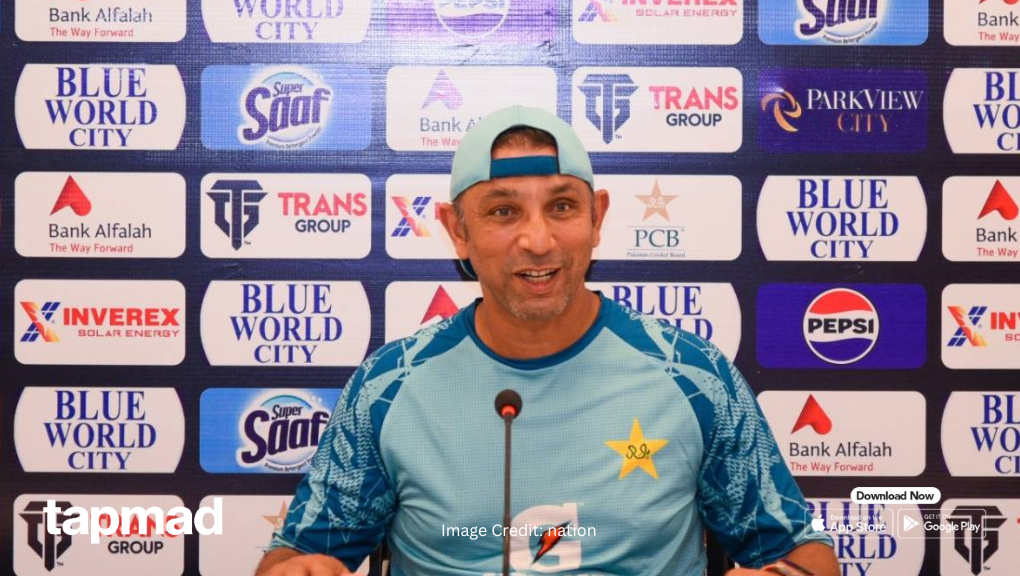

Pakistan red-ball head coach Azhar Mahmood voiced his frustration after Pakistan displayed yet another batting collapse in the Rawalpindi test. It is a situation that was described by Azhar Mahmood as “unacceptable”, something that should not be happening regularly. During the last few years, Pakistan has faced many collapses like this in different tests. As a result, they lost games that should have been won easily, without creating unnecessary tension.
Speaking about the Rawalpindi test, Azhar Mahmood highlighted the first innings in which his team went down badly after getting a strong start. It is certainly true because Pakistan was looking well set to score 400+ runs in the first innings while Agha and Rizwan were batting at the crease.
"The first innings collapse was where it started. We lost 5 for 17. We should have posted 400-425 there, which was the position we'd put ourselves in. Agha and Rizwan were building a partnership which we couldn't utilise.” said Azhar Mahmood at the post-match press conference.
He further stated that the lower order needs to score runs when the game has been set up by the upper order. He highlighted a conversation the team had during the training camps, in which this specific issue was discussed at length.
"This is the fourth time in two Tests that we've lost wickets lower down the order cheaply. This is not acceptable, and we need to take responsibility. We spoke about this at our two camps. Whenever your top players score 270-300, the contribution from the lower order really matters." said Azhar Mahmood.
The coach then praised the performance of the South African team in the Rawalpindi test. He highlighted how newcomers such as Muthuswamy stepped up when the team needed contributions from the lower order. He further explained the game awareness of Muthuswamy, as how he batted with Maharaj and Rabada to build a strong partnership at the end.
"You also have to give credit to opposition. South Africa were much better than us in this department. We could have taken the lead but credit goes to Muthuswamy, the way he played; his shot selection was perfect. He put on 70 with Maharaj and 98 with Rabada. If you play with a quality team and you give them several chances in a brief period of time, they will punish you. That's what happened and we allowed them extra runs.” said Azhar Mahmood.
He further elaborated that players need to know their game when they face tough situations during the match. The best way to do that is by learning from the opposition. He gave the example of Muthuswamy, saying that he played sweeps and reverse sweeps with perfection.
"You have to work on your game and know your scoring shots. You can learn from the opposition. Muthuswamy scored primarily from the sweep and reverse sweep. You should know your scoring options. When we went to bat, we started blocking early. If we had rotated the strike and put pressure on them, we could have pushed them off their lengths. The way they did - though of course a low target made it easier. You need mental toughness; international cricket is all about how you cope with pressure." said Azhar Mahmood.
The coach then stated that playing fewer tests in a calendar year does not help them to grow. He cited the tough schedule of the Pakistan team that will now play its next test in March 2026.
"It is a concern that we have a poor record in our third and fourth innings. But if you play four Tests in a year and the team only gets together every six months, you don't have time to work on your game. We last played in January, and our next Test is in March. These gaps are too long, and we'll have to play regular Test matches to cope with these situations." said Azhar Mahmood.
With the test series against South Africa done and dusted, Pakistan will now move towards the white ball games. It will be another challenge for the green shirts as they are currently under pressure after facing a setback in the Asia Cup. It will be interesting to see how they perform in the T20I matches, as multiple changes have been made to the squad to address previously highlighted issues.