


November 3, 2025
India’s WC Glory, A Tribute to Mithali, Goswami & Chopra
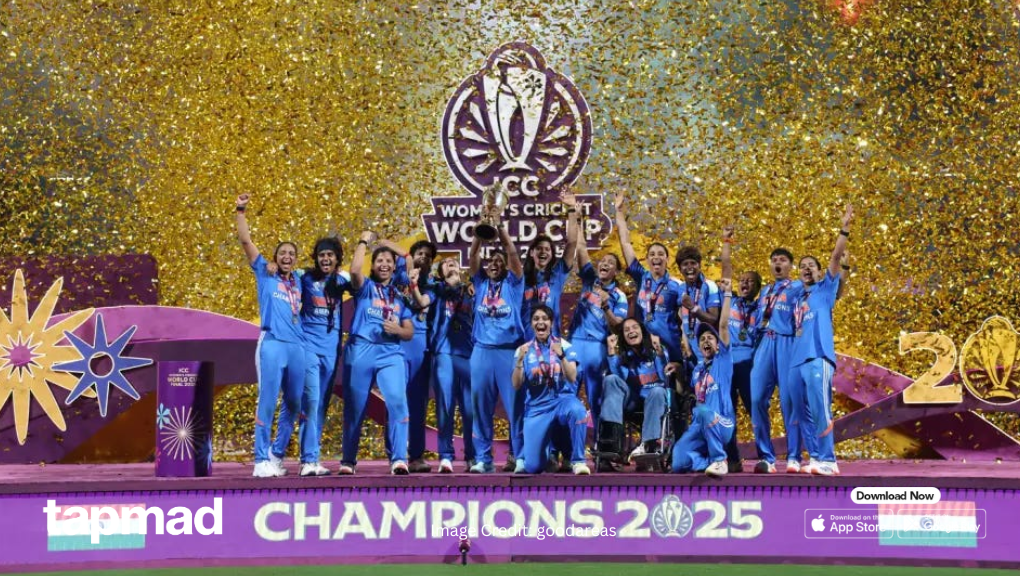

It was not just a victory lap but a historical, emotional, and tearful one. As the winning Indian team went around the ground in Navi Mumbai with the ODI World Cup trophy, they paused in front of the three women who had been carrying the Indian cricket team through the most difficult days: Mithali Raj, Jhulan Goswami, and Anjum Chopra. And all three legends said just two words, "Thank you."
Jhulan Goswami sobbed tall over captain Harmanpreet Kaur and vice captain Smriti Mandhana. She whispered those words with closed eyes, realizing the dream she had been pursuing all her life was finally fulfilled.
Mithali raised the trophy high above her head as her team cheered. Six years ago, she had come painfully close to this moment. She held it like a lifelong promise finally fulfilled. Now, with the trophy in her arms, she smiled at it with a bright, beaming smile.
Anjum Chopra broke into a cracking voice in the commentary box. She threw her arms around Harmanpreet with a heartfelt "you have done it," moments after she had exclaimed "finally, finally, finally" on air, releasing two painful memories from the 2005 and 2017 World Cup finals.
For Chopra, this third time was the real “finally,” the one that erased the heartbreak of the past and lit up the future. What followed was a celebration that stretched from the stadium to the team hotel, filled with cheers, laughter, and tears of joy that refused to dry.
The team then took the trophy to Reema Malhotra, a former Indian cricketer who represented the country 64 times and was Harmanpreet’s senior during the 2009 and 2013 World Cups.
The reunion was pure emotion. The two hugged and broke into "Sadda haq, aithe rakh," a song that means "give me my rights, here and now," symbolizing their fight for equality, recognition, and respect, battles that defined generations of women cricketers before them.
It was an ironic moment. The current players were appreciating the same women who had made their dreams come true in the past.
It’s today’s fast bowlers who should thank Goswami. Her grit made speed an aspiration for young girls across the nation.
Today’s batters owe their inspiration to Mithali, who scored a Test double century at 19 and captained India to two World Cup finals. Harmanpreet never forgets how Chopra had taken her under wing, when she was still getting used to her place in the team, and how close she gets that she now even refers to her as a kaptaan.
"Yes, Jhulan di was my biggest support," Harmanpreet said after the final. "When I joined the team, she was leading it. She always supported me in my early days when I was very raw and didn't know much about cricket.
"I used to play with boys, and the school principal picked me up, and within a year, I started representing the country. In the initial days, Anjum supported me a lot. I always remember how she used to take me along with her team. I learnt a lot from her and passed it on to my team.
"Both of them have been a great support for me. I'm very grateful that I got to share a special moment with them. It was a very emotional moment. I think we all were waiting for this. Finally, we were able to touch this trophy."
Even as she sat at the post-match press conference saying she felt “numb,” there was gratitude in Harmanpreet’s voice. She was not only representing her team, but all women who wore the colors of India, families, coaches, and friends who have given up with the players, and all the pioneers who were able to create the base of Indian women in cricket by means of will alone.
Two of those pioneers Diana Edulji and Shantha Rangaswamy were watching from the stands that night at DY Patil Stadium. They are the reason the Indian women’s team even exists in the form it does today.