


May 14, 2026
Can Germany Go All The Way In FIFA World Cup 2026?
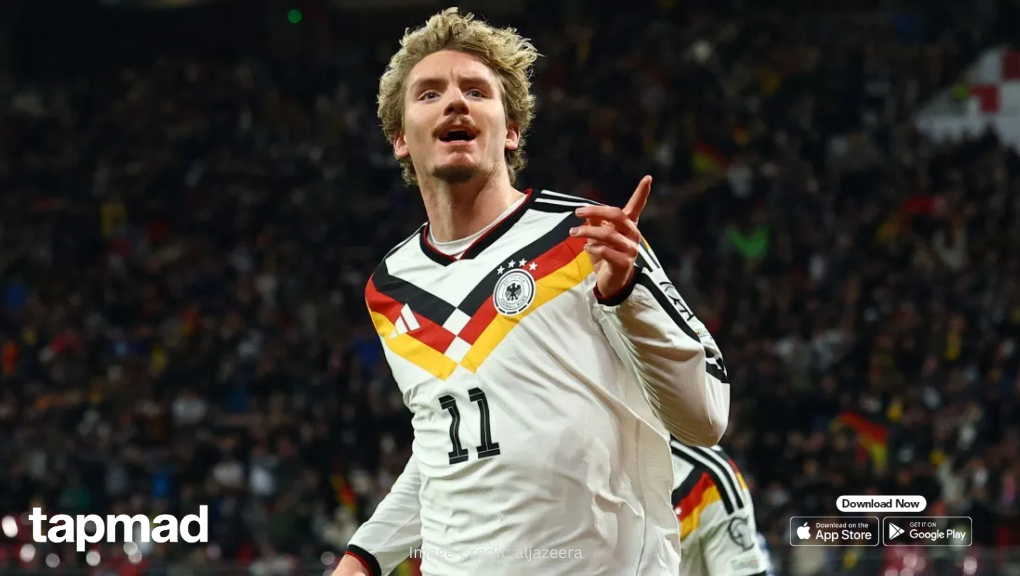

Germany head into the FIFA World Cup 2026 sitting 10th in the rankings. That number doesn’t really show the improvement under Julian Nagelsmann, and it also doesn’t calm the frustration in the country after Germany failed to get past the group stage in both 2018 and 2022.
One notable change in the German camp is that their style of play has taken a big shift. Nagelsmann has pushed the team away from the slower, structured approach of Joachim Löw, as the side now plays with a more direct attack plan. Much of the creativity now runs through Florian Wirtz, who has grown into one of the most gifted young players in Europe.
In Group E with Curaçao, Ivory Coast and Ecuador, Germany are expected to finish on top. The main debate is not about reaching the next round, but how far this refreshed squad can go once the knockout stage begins.
In this article, we will take a look at the chances of Germany in the FIFA World Cup 2026, so that you can understand how much their squad has the ability to perform in the mega event. Before that, let’s take a quick overview of their past performances to understand why Germany are considered one of the biggest teams in world football.
Germany World FIFA World Cup History, Results and Performances
Very few countries have a World Cup history as strong as Germany’s. They have won the tournament four times, while also reaching eight finals and regularly making deep runs in the competition. Their 2014 victory in Brazil, sealed by Mario Götze’s extra-time goal against Argentina, was seen as the high point of a long-term project built around a talented generation of players.
After that success, however, Germany’s level dropped quickly. At the 2018 World Cup, they suffered a shocking group-stage exit after failing to get through a group featuring South Korea, Sweden and Mexico. The struggles continued in 2022, when defeats against Japan, along with a draw against Spain despite beating Costa Rica, led to another early elimination and showed the team’s issues were much bigger than just one bad tournament.
Germany Squad Analysis for FIFA World Cup 2026
Julian Nagelsmann was appointed as Germany head coach in September 2023. Known for his modern ideas and flexible tactics, Nagelsmann had already earned praise during his time with different football clubs.
Under Nagelsmann, Germany have mostly played in a 4-2-3-1 formation. The two central midfielders play an important role in keeping the team balanced, which is why their position in the side is considered very strong. Further forward, the attacking midfielders are given freedom to move around, link up with each other and find spaces in the opposition defence.
Talking about the weaknesses, the biggest issue in this German side comes on the left side when David Raum pushes forward. If Musiala and Wirtz are also pressing high up the pitch at the same time, space can open up behind them. Quality teams can then use counter-attacks to target the gap between the left centre-back and the area left empty by the full-back. This could ultimately prove costly for them, as good sides will try to take advantage of it by using their speed and direct attacking play.
Key Players for Germany in FIFA World Cup 2026
Florian Wirtz
Florian Wirtz is the main creative player in the current Germany team. In six qualifying matches, he scored once and provided two assists, although those numbers do not fully show how important he is to Germany’s attacking play. His ability to control the ball in tight areas and stay calm under pressure makes him one of the biggest threats in the team.
Jamal Musiala
When fully fit, Jamal Musiala is probably Germany’s most important player. His dribbling, direct style and smart movement in central areas make him one of the best attacking talents in the team. However, his fitness remains one of the biggest concerns for Germany ahead of the tournament.
Nick Woltemade
Nick Woltemade was Germany’s unexpected hero during the qualification round, scoring four goals in six matches. Although he is not as established at club level as Kai Havertz, his recent form has made it difficult to leave him out of the team.
Germany Expected Lineup for FIFA World Cup 2026
Baumann; Kimmich, Tah, Schlotterbeck, Woltemade; Pavlovic, Goretzka; Gnabry, Musiala, Wirtz; Havertz
Germany Fixtures in FIFA World Cup 2026
Germany are considered the favorites in Group E of FIFA World Cup 2026. Each opponent brings a different style, but the tougher challenges are expected to come later in the knockout rounds rather than in the group stage.
Curacao will be playing at the World Cup for the first time and are viewed as the weakest side in the group. Ivory Coast have dangerous attacking players and enough pace to trouble Germany, especially in their June 20 meeting. Meanwhile, Ecuador appear to be the most disciplined team among the three and could make life difficult by staying compact defensively and attacking quickly on the counter.
|
Match |
Date |
Time (EST) |
Opponent |
|
Match 1 |
June 14 |
14:00 |
vs Curaçao |
|
Match 2 |
June 20 |
17:00 |
vs Ivory Coast |
|
Match 3 |
June 25 |
17:00 |
vs Ecuador |
Final Words
Germany are expected to get through Group E without much trouble. That part is hardly in question. The real talking point is whether this side can finally carry their level into the knockout rounds, something they have not managed consistently since 2014.
On paper, Germany look like a team that should reach the quarter-finals, and they could even go further if Jamal Musiala is fully fit and the attack clicks. Their potential is strong enough that a deep run is possible, but back-to-back early exits in recent tournaments still hang over them. Once the pressure rises in the knockout stages, it will be a proper test of how far this rebuild has really gone.