


May 14, 2026
France FIFA World Cup 2026 Squad Announcement and Team Preview
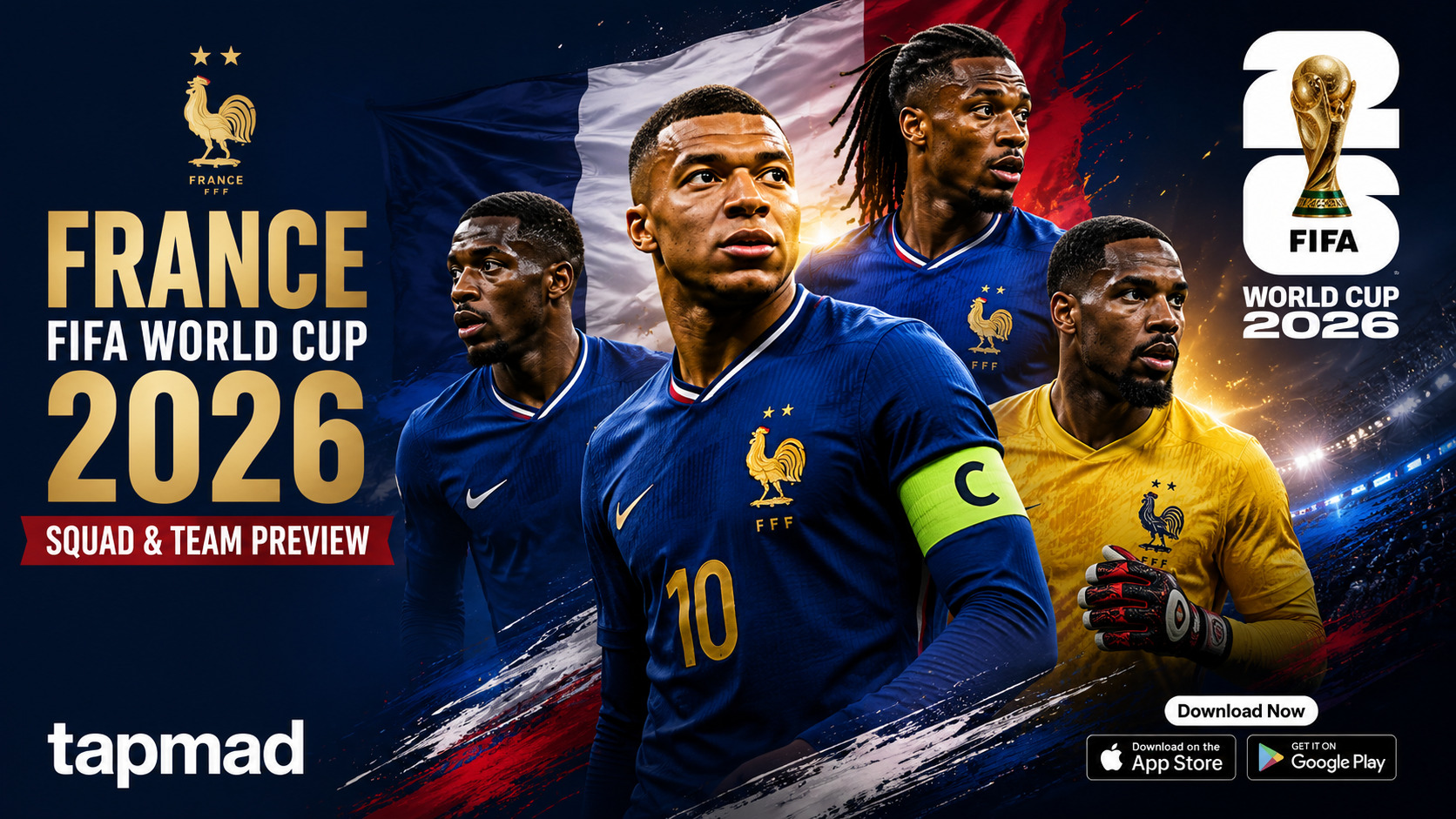

France arrives at the 2026 World Cup as the top-ranked side in FIFA's world rankings, carrying a squad that has genuine depth across every position. On paper, the case for them as tournament favourites is straightforward. In practice, as they have found out across the past two major tournaments, paper cases do not always survive contact with knockout football.
Didier Deschamps, in what is expected to be his final tournament as national team manager before Zinedine Zidane takes the reins, has named a 26-man France squad that blends established experience with a younger generation that has been integrated steadily over the past two seasons.
The France World Cup Squad 2026
Goalkeepers: Mike Maignan, Lucas Chevalier, Brice Samba
Defenders: Malo Gusto, Lucas Digne, Lucas Hernandez, Theo Hernandez, Pierre Kalulu, Ibrahima Konate, William Saliba, Dayot Upamecano
Midfielders: Eduardo Camavinga, N'Golo Kante, Manu Kone, Adrien Rabiot, Aurelien Tchouameni, Warren Zaire-Emery
Attackers: Maghnes Akliouche, Rayan Cherki, Ousmane Dembele, Desire Doue, Hugo Ekitike, Randal Kolo Muani, Kylian Mbappe, Michael Olise, Marcus Thuram
Tactical Setup and Likely Formation
Deschamps has settled into a 4-3-3 shape that can shift into a 4-2-3-1 depending on who starts in midfield and how the opposition lines up. France tends to be conservative in their defensive organisation, pressing selectively rather than aggressively, and looking to transition quickly once they win possession. That approach suits the personnel available, particularly in the final third, where the attacking options are capable of punishing teams on the counter.
The midfield three will be the area most analysts watch closely. Tchouameni sits as the deepest of the three, providing cover for the back four and acting as the primary link between defence and attack. Camavinga, who averaged above 90 percent passing accuracy across the qualification campaign, gives France composure and mobility in the middle third. Zaire-Emery's inclusion adds energy and forward movement, and at 20 years old, he has already shown he can handle the demands of international football without looking overawed by it.
Kante, at 35, is not the player who won the World Cup in 2018, but his reading of the game and positioning still make him a useful option. His involvement will likely be managed rather than automatic.
Mbappe and the Attacking Structure
There is not much left to establish about Kylian Mbappe's importance to this team. He goes into this tournament with 56 international goals, a winners' medal from 2018, and the memory of a hat-trick in the 2022 final in Qatar that was ultimately not enough to prevent defeat to Argentina. France's attacking structure, in most match situations, is built around giving him space and service.
What has changed slightly is the supporting cast around him. Olise, who produced 22 goals and 36 assists for Bayern Munich this season, operates with an intelligence and technical range that France's previous right-sided options often lacked. He is not a direct winger in the traditional sense. He finds pockets, plays combinations, and has a habit of arriving in dangerous areas at the right moment. His partnership with Mbappe could be one of the more interesting aspects of France's attacking play to watch.
Dembele, who has had an inconsistent club career but remains one of the better dribblers in European football, is likely to feature regularly. When his decision-making is sharp, he stretches defences in a way few others can. When it is not, he can be wasteful at critical moments. That has been the consistent tension with him throughout his career, and it has not fully resolved itself.
Defensive Structure and Maignan's Role
France's defensive record coming into the tournament has been solid. Maignan kept five clean sheets across France's final seven matches before the squad announcement, and his form for both club and country over the past two seasons has established him as one of the better goalkeepers in the world. He is comfortable with the ball at his feet, which matters in a team that likes to build from the back.
Saliba and Konate form the expected first-choice centre-back pairing. Saliba has developed significantly since his earlier international call-ups and now carries himself with the assurance of someone who has been playing at the top level consistently for several years. Upamecano is the depth option but has had a difficult club season at times, which may affect Deschamps' level of trust in him from the start.
The full-back positions have evolved. Theo Hernandez on the left provides a constant attacking outlet, though he can leave space behind him. Gusto on the right is more measured and defensively disciplined.
France's Form and What the Numbers Suggest
France scored 24 goals across their last eight matches before the tournament, which reflects both the quality of their attacking options and the relatively modest level of opposition in their qualification group. A 2-1 friendly win over Brazil offered more meaningful evidence, though one friendly result should not be overread. What it did confirm is that the squad functions well as a unit and that the younger players have adapted to the demands of senior international football at this level.
Their group at the 2026 World Cup features Senegal, Norway, and Iraq. It is not the most straightforward group France could have drawn. Senegal, in particular, has physical presence and tactical organisation that could test France's build-up play, especially if they press aggressively in behind the midfield line. Norway, with Haaland leading the attack, offers a different kind of problem. France will be expected to advance comfortably, but both of those matches require focused performances.
Young Talents and the Depth Available
The presence of Cherki, Doue, and Akliouche reflects how much talent France has accumulated in the attacking third. None of them is a likely starter, but they are not simply squad fillers either. Cherki, in particular, has had a season that suggests he could handle meaningful minutes if circumstances require it. Doue, at 19, is still finding his level consistently, but his technical ability is evident.
Ekitike's inclusion adds another option through the middle if Kolo Muani or Thuram are unavailable or out of form.
Strengths and Realistic Concerns
The France national team 2026 squad has clear structural advantages. The goalkeeper is reliable. The centre-backs are dominant aerially and composed on the ball. The midfield has both defensive discipline and technical quality. And the attacking talent, when it functions together, is among the best at the tournament.
The concerns are more specific. France still has occasional issues against teams that press high and quickly, particularly in the moments when they are trying to build out from defence under pressure. Their recent tournament exits, at Euro 2020, Euro 2024, and the 2022 World Cup final, have each come with different explanations, but the pattern of underperforming relative to squad quality in knockout stages is real and worth acknowledging.
There is also a question about whether this group, with so much individual talent competing for limited roles, will remain cohesive across the weeks of a tournament. Squad harmony has occasionally been a complicating factor for France in the past.
France's Predicted Lineup 2026 and Tournament Prospects
France is expected to open the 2026 FIFA World Cup with Maignan in goal, Saliba and Konate in central defense, and Theo Hernandez providing width from fullback. Tchouameni anchors midfield, while Mbappe, Dembele, and Olise lead an attack built around pace and movement.
The France World Cup squad 2026 has the quality and experience to challenge for the title again. Depth across midfield and attack gives Didier Deschamps multiple tactical options, although consistency under pressure and defensive fitness could still determine how far France ultimately progresses.