


May 26, 2026
England FIFA World Cup 2026 Squad Announcement and Team Preview
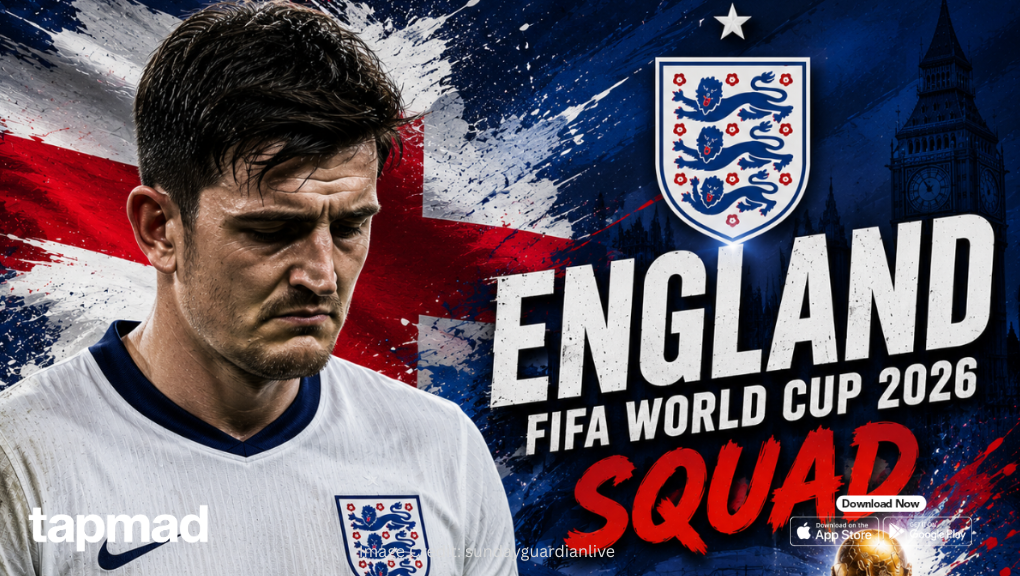

England enter the 2026 FIFA World Cup carrying both the weight of 60 years without a major trophy and a genuine, well-founded belief that this time the squad is capable of ending it. Thomas Tuchel's selection has caused considerable debate, with high-profile omissions in every position, but the logic running through it is consistent: form, fitness, and a willingness to work within the system matter more than reputation. Tuchel has 26 fully committed players in camp who know their role, are ready to buy into the idea of team spirit, and are prepared to be unselfish. That framing tells you a great deal about how he has approached the job.
England qualified for their eighth successive World Cup by winning all eight of their qualifying matches without conceding a single goal, a record that reflects both defensive solidity and the quality available across the squad. The tournament now offers the opportunity to do something none of England's previous generations managed in the modern era.
The England World Cup Squad 2026
Goalkeepers: Jordan Pickford (Everton), Dean Henderson (Crystal Palace), James Trafford (Manchester City)
Defenders: Reece James (Chelsea), Tino Livramento (Newcastle), Marc Guéhi (Manchester City), Ezri Konsa (Aston Villa), John Stones (Manchester City), Jarell Quansah (Bayer Leverkusen), Nico O'Reilly (Manchester City), Dan Burn (Newcastle), Djed Spence (Tottenham Hotspur)
Midfielders: Declan Rice (Arsenal), Elliot Anderson (Nottingham Forest), Jude Bellingham (Real Madrid), Jordan Henderson (Brentford), Morgan Rogers (Aston Villa), Kobbie Mainoo (Manchester United), Eberechi Eze (Arsenal)
Forwards: Harry Kane (Bayern Munich), Ivan Toney (Al-Ahli), Ollie Watkins (Aston Villa), Bukayo Saka (Arsenal), Noni Madueke (Arsenal), Marcus Rashford (Barcelona), Anthony Gordon (Newcastle)
Tactical Setup and Likely Formation
Tuchel has settled on a 4-2-3-1 as his preferred structure, a system that suits the personnel available and provides defensive balance while giving the attacking players defined roles. Declan Rice and a second holding midfielder sit in front of the back four, with a creative number ten operating behind Kane. The wide forwards are expected to press aggressively and provide width, while the full-backs push forward selectively depending on the situation.
Throughout qualifying, England developed into a high-pressing 4-1-4-1 setup that produced consistent clean sheets and controlled performances. Tuchel has shown tactical flexibility, though, and the squad has the profile to shift into a 3-4-2-1 if circumstances demand it in the knockout rounds.
The midfield is where much of England's structure is determined. Rice has been outstanding for Arsenal and is the automatic first choice at the base, screening the defence and distributing from deep. Declan Rice is having a standout season for Arsenal, who topped the Premier League table and reached the UEFA Champions League final. Around him, Tuchel has options. Anderson has impressed across the qualifying campaign with his energy and forward movement, while Mainoo's recovery in form under Manchester United provides another reliable option in the engine room. Rogers, who started ahead of Bellingham across several qualifying fixtures, has made the number ten position genuinely competitive rather than guaranteed for any one player.
Kane, Bellingham, and the Attacking Structure
Harry Kane is England's captain and all-time leading scorer, and has been in prolific form this season, netting 60 goals from 53 appearances for Bayern Munich. At his third World Cup, Kane arrives as the most experienced and reliable finishing option England have ever had, and the entire attacking system is built around giving him service in dangerous areas. Kane captaining England at his third World Cup equals the record set by Billy Wright in 1950, 1954, and 1958.
Behind him, the question of who starts at number ten is the most debated selection decision in the squad. Jude Bellingham had a big impact in England's run to the Euro 2024 final, which they lost to Spain, and arrives at this tournament as one of the most recognisable players in world football. However, Tuchel is yet to be fully convinced by the Real Madrid midfielder and appears to have placed a great deal of trust in Morgan Rogers, whose intelligent movement and pressing intensity fit the system particularly well. The competition between the two is one of the most genuinely open battles in the squad for a starting place.
On the flanks, Bukayo Saka is the most important wide player in the squad. His consistency, decision-making, and ability to both create and score make him one of the first names on any teamsheet Tuchel writes. Arsenal's Premier League title winners Eberechi Eze and Noni Madueke will be going to their first World Cup, and both bring the kind of direct, attacking quality that can shift games off the bench or from the start. Marcus Rashford, dropped from Euro 2024, has rebuilt his career at Barcelona this season and returns to a major international tournament with renewed confidence and better form than he has shown in several years.
Defensive Structure and Pickford's Role
Jordan Pickford's status as number one is under no threat, despite Dean Henderson's best efforts. Pickford has been England's first-choice goalkeeper across every major tournament since 2018, and his experience at that level gives Tuchel a reliable foundation at the back.
In front of him, Guehi and Stones are the leading contenders to start as the first-choice centre-back pairing, with Konsa and Quansah providing competition and depth. Quansah has been solid in Leverkusen's backline and has been preferred to the major tournament stalwart Maguire. At right-back, Reece James was Tuchel's premier choice when fully fit, having started six of England's seven games at Euro 2024. Livramento provides cover on both flanks and has been one of England's more reliable performers across the qualifying campaign when called upon.
England's Form and the Group Stage Picture
England's qualifying record was as clean as it could have been. The Three Lions won all eight qualifying matches without conceding, a record that reflects both the defensive organisation Tuchel has installed and the quality of the attacking players in front of them. The March friendlies, a draw with Uruguay and a defeat to Japan, provided more meaningful evidence about where the gaps still exist, though friendly results in non-competitive conditions should not be overread.
England face Croatia, Ghana, and Panama in Group L. The opening match against Croatia in Texas on June 17 is the standout fixture, with Croatia having beaten England in the semi-finals of the 2018 tournament. Ghana, with the depth of talent their domestic league has produced in recent years, are not a straightforward second fixture either. Panama sit as the group's clearest qualifier on paper, but Tuchel has been measured in how he has addressed the group, noting that no opponent should be underestimated.
Strengths and Realistic Concerns
The England World Cup squad 2026 has clear structural strengths. The goalkeeping position is stable. The defensive record in qualification was exceptional. The midfield has both coverage and creativity, and the attacking depth, from Kane through Saka, Rashford, Eze, and Madueke, gives Tuchel more options in the final third than most England managers have been able to call upon.
The concerns are more situational. Bellingham's place in the starting lineup is not certain, which creates a question about whether England are deploying all of their available talent in the most effective way. The full-back positions, particularly with Livramento managing a recent injury, carry a fitness risk. And the pattern of England performing well through groups before finding knockout football against top-level opposition more complicated is a recent and real tendency.
On daring to dream, Tuchel said he could dream, but very quickly goes back and chops it up into steps he can influence, telling players the previous March to try to win it. That combination of ambition and pragmatism is the right approach for a squad with this much ability, and it is the tone that will define how England's 2026 campaign unfolds.
Final Words
England are expected to open the 2026 FIFA World Cup with Pickford in goal, Guéhi and Stones as the centre-back pairing, James at right-back, and O'Reilly providing width on the left. Rice anchors the midfield double pivot alongside Anderson, with Rogers at number ten. Saka and Rashford offer width on both flanks, with Kane leading the line.
The England World Cup squad 2026 has the quality to reach the final stages of the tournament. The defensive foundation is solid, the midfield has balance, and the attacking talent is among the most varied in the competition. Whether Tuchel can find the right combination in the attacking third, and manage the selection tension around Bellingham and Rogers, may ultimately determine how far this generation goes in North America.