


April 14, 2026
Bayern München vs Real Madrid Quarter-final Second-leg Match Preview
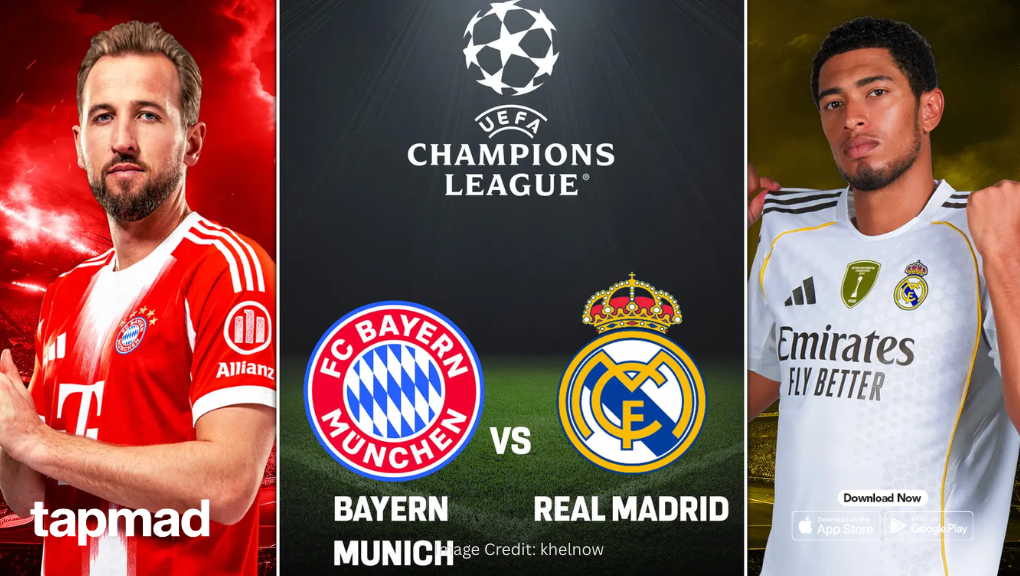

Few fixtures in world football carry the weight of Bayern München vs Real Madrid. Two of the most decorated clubs in Champions League history meet once again in a quarter-final second leg that promises drama, tactical brilliance, and moments of individual genius. With a place in the semi-finals on the line, both sides arrive knowing that a single mistake could end their European dream.
Bayern München enters the tie as a side capable of controlling matches through possession and precision. Real Madrid, as always, carries the aura of a club that simply refuses to be eliminated. This second leg is not just a football match. It is a battle between two footballing philosophies, two continental powers, and two fan bases that know exactly what this rivalry means.
Match Overview
The second leg of this Champions League quarter-final represents a decisive moment in the European campaign for both clubs. The aggregate score from the first leg will determine what each side needs, whether that means protecting a lead, chasing a comeback, or playing for the draw that forces extra time.
Real Madrid will likely have the backing of their home crowd if the tie heads to the Bernabéu, turning one of European football's most intimidating arenas into a fortress. Bayern, on the other hand, carry the confidence of a team that has dominated possession and carved open defenses consistently throughout the competition.
Bayern München vs Real Madrid Head-to-Head History
The Bayern München vs Real Madrid rivalry is among the richest in European football history. Across all competitive meetings, Real Madrid hold a narrow edge with 13 wins compared to Bayern's 12, and 4 draws separating the two sides. The goal tally tells a similarly tight story, with Real Madrid scoring 46 goals to Bayern's 44.
In terms of Champions League pedigree, the gap is more pronounced. Real Madrid have claimed 15 European Cups, with their most recent triumph coming in the 2023/24 season. Bayern have won the competition 6 times, with their last success coming in the 2019/20 campaign.
Individually, no player defines this fixture more than Cristiano Ronaldo, whose 105 goals for Real Madrid in Champions League history make him the all-time top scorer in the competition. For Bayern, Robert Lewandowski's 69 Champions League goals serve as a reminder of the relentless firepower the German side has produced over the decades.
Statistical Comparison and Tactical Insights
Attacking Analysis
Bayern München have been clinical throughout this campaign, scoring 34 goals with 30 of those coming from inside the penalty area. Real Madrid have netted 30 goals, showing slightly less efficiency but compensating with a higher volume of attempts, 232 total compared to Bayern's 210.
Where Real Madrid truly stand out is in their ability to carry the ball forward. They have completed 277 dribbles compared to Bayern's 205, and their 217 runs into the attacking third reflect a side that attacks with pace and directness. Bayern, however, have converted their clear chances at a higher rate, creating 12 clear-cut opportunities against Madrid's 9.
Midfield and Distribution Battle
Bayern München have dominated possession across the competition, averaging 58 percent compared to Real Madrid's 55 percent. Their passing accuracy of 90 percent, built on 6,378 completed passes from 7,004 attempts, highlights a side that values controlled build-up play.
Real Madrid's crossing accuracy of 31 percent dwarfs Bayern's 18 percent, and their 50 completed crosses compared to Bayern's 26 suggest they will look to exploit wide areas and deliver into the box. With 530 long passes completed versus Bayern's 470, Madrid also possesses the range to switch play and bypass a high defensive line.
Defensive Strength
Real Madrid have been the more active defensive side in terms of raw numbers. Their 479 ball recoveries outpace Bayern's 392, and their 239 tackles compared to Bayern's 130 reflect a team willing to press and win the ball back aggressively. Madrid have also completed 175 clearances, more than Bayern's 132.
Bayern's defensive discipline is notable in one specific area. They have conceded zero penalties throughout the competition, while Real Madrid have conceded two. That composure in the box could prove decisive if the tie reaches a critical moment.
Goalkeeping Comparison
Real Madrid's goalkeeper has been busier and arguably more decisive. Their shot-stopper has made 69 saves compared to Bayern's 44, which reflects both the greater number of attempts faced and the individual quality behind the defense. Real Madrid also boast 4 clean sheets compared to Bayern's 2, suggesting their backline has been more organized when needed.
Bayern have conceded 11 goals in the competition to Real Madrid's 16, meaning the German side have been the harder team to score against overall.
Discipline and Physicality
Real Madrid have committed 139 fouls compared to Bayern's 118, and their tally of 28 yellow cards and 3 red cards exceeds Bayern's 25 yellows and 2 reds. Both sides have been physical, but Madrid's aggression has occasionally crossed the line.
In a knockout tie where a moment of madness can change everything, disciplinary awareness will be crucial for both managers to address.
Key Players to Watch
Harry Kane has been the focal point of Bayern's attacking play, combining hold-up ability with lethal finishing. His link-up play with the midfield will be central to how Bayern create opportunities.
Jamal Musiala offers something different, a player who drifts between lines, invites pressure, and releases it with a burst of pace or a perfectly weighted pass. He is one of the most exciting young talents in world football.
Vinícius Júnior is Real Madrid's greatest attacking weapon. His ability to beat defenders in one-on-one situations and his direct running toward goal make him a constant threat and a nightmare for any right back.
Jude Bellingham has elevated his game to the highest level since joining Real Madrid. His energy, vision, and ability to arrive late into the box make him one of the most complete midfielders in the competition.
Luka Modrić, even at this stage of his career, controls tempo in a way few players in the world can match. His ability to slow the game or accelerate it gives Carlo Ancelotti a vital tactical tool.
Expected Lineups and Formations
Bayern are expected to line up in their familiar 4-2-3-1 shape, with Kane leading the line and Musiala operating in the attacking midfield role behind him. The double pivot will look to win the midfield battle and recycle possession efficiently.
Real Madrid are likely to deploy a 4-3-3 formation, with Vinícius on the left, a central striker, and Bellingham operating as the advanced midfielder. Modrić and another central midfielder will provide balance and control in the middle third.
Managerial Tactical Battle
Carlo Ancelotti is one of the most experienced managers in Champions League history, with a remarkable ability to read matches and make changes that shift momentum. His calm on the touchline masks a sharp tactical mind.
Bayern's manager will need to match Ancelotti's composure while also ensuring their side does not surrender the midfield to Madrid's creative players. The battle in the center of the pitch will likely determine which team controls the tempo across the 90 minutes.
Strengths and Weaknesses
Bayern München
Strengths: Superior possession control, higher passing accuracy, clinical finishing, strong defensive record with zero penalties conceded.
Weaknesses: Lower crossing output, fewer defensive recoveries, and slightly fewer clean sheets than their opponents.
Real Madrid
Strengths: Greater defensive activity, superior crossing accuracy, more clean sheets, and a goalkeeper with an elite saves record.
Weaknesses: More fouls and cards, more goals conceded across the competition, and slightly lower possession share.
Conclusion
Bayern München vs Real Madrid is not just a football match. It is a meeting of two clubs whose histories are woven into the fabric of European football. The statistics suggest a closely matched contest, but Champions League knockout football has never been purely about numbers.
Real Madrid's 15 European titles serve as a constant reminder that experience and belief can overcome statistics. Bayern, equally proud of their legacy, will not be intimidated. When these two giants collide, football always wins. Whatever the result, this quarter-final second leg will be remembered long after the final whistle.